Relevance of accessibility control security
Gain access to control protection is a broad term covering the policies, processes, tools and also methods that protection teams make use of to safeguard individuals, building as well as data against threats posed by unapproved burglars. By managing accessibility to structures as well as particular locations within buildings, a protection team can decrease vulnerability by making sure that just authorized customers get.
While physical gain access to control methods, such as doors, turnstiles or entrances, are the main methods for safeguarding vulnerable locations, an raising number of organizations are assembling and also coordinating their physical protection and cyber security approaches to eliminate any possible voids in their total protection posture.
Why gain access to control is essential
The key function of gain access to control safety, or truth accessibility control security significance, is to make certain the highest level of defense for a structure and also its owners as well as components by taking care of access to decrease danger. With 60% of firms utilizing outdated gain access to control options that end up being much more prone annually, it is critical for business to regularly evaluate their access control safety and security (International Safety and security Journal).
Unapproved trespassers can steal or harm residential property. If they get to locations such as server spaces or executive offices, for example, they could take sensitive industrial or individual information, or launch cyber strikes from unsecured tools within the building. In extreme scenarios, intruders may try to interrupt regular tasks or damage individuals within the building.
Accessibility control methods can provide various other essential benefits. The data from access control tools can give beneficial understanding into usage levels for sources, such as seminar rooms or automobile parks where access systems are in place. This can assist centers management groups to create strategies based upon exact information.
Access control in conjunction with surveillance likewise enables safety groups to take care of movement as well as restriction access within busy locations to lower the risk of congestion or keep social distancing-- a important contribution to safety and security throughout the pandemic.
Touchless, cloud-based safety and security
• Fast as well as touchless access backed by patented Three-way Unlock innovation with 99.9% unlock dependability
• Cloud-based software enables totally remote management as well as the capability to adjust routines as well as permissions from anywhere
• Easy multi-site management with automatic user sync and the capability to add new sites in a few clicks
• Remote unlock, electronic visitor passes, and also real-time notifies with video clip on the top-rated mobile application
• Track access activity, aesthetically keep track of access, as well as obtain safety and security notifies in real-time
• Built on open criteria to seamlessly integrate with all your hardware, software application, as well as modern technology apps
• Mounts promptly and ranges conveniently with streamlined hardware that's acclaimed for design
• Automatic updates, offline cloud sync, and also sure, end-to-end security
Determining areas for access control
The starting factor for an access control strategy is to determine locations that need to be safeguarded as well as regulated. Some are noticeable, like the main entrance to the building, turnstiles, elevators, parking lot barriers, or the door into a web server room:
• Main entry-- This is a reception area where check-in is automated and also employees and visitors have to provide qualifications.
• Turnstiles-- These can be situated near the major entryway as an access control mechanism where there is no other form of check-in. They may additionally be found on other floors or areas that require to be safeguarded.
• Car park entry-- This may be protected by a gate or other form of obstacle that limits accessibility to accredited individuals or authorized visitors.
• Elevators-- Gain access to controls may be made use of to manage numbers of residents or to regulate access to certain floors.
• Server areas-- All entrances must be protected, allowing only authorized individuals.
Nonetheless, it's necessary to determine various other locations that are prone to invasion, stand for a security risk, or where it is essential to take care of activity:
• Prone locations-- These consist of fire escape, home windows, or unprotected exterior doors where burglars could get accessibility without detection.
• Areas with a safety threat-- These include workplaces, storage locations or conference room where confidential information is held.
• Locations to take care of movement-- These consist of lifts, entrance halls, stairs and also flows where it's important to avoid congestion.
Accessibility control plans
What is an gain access to control policy? Well, as determining locations to secure, it is essential to establish who has access to specific locations and that decides regarding accessibility degrees. These access control versions fall under 4 sorts of accessibility control safety categories:
Discretionary access control
This design provides private customers access to particular areas at the discernment of someone, the proprietor as an example. The weak point of this model is that the person with discernment may not have safety know-how to assign permissions based on complete understanding of risks as well as accessibility control susceptabilities. Where security risks are low, this may be a suitable model.

Necessary gain access to control
With this gain access to control design, accessibility approvals are identified by a Safety Administrator-- generally a specialist with safety and security proficiency, such as a chief gatekeeper or an IT supervisor with safety and security experience. This individual collections and also manages approvals as well as is the only individual with the authority to do so. The compulsory gain access to design is necessary for companies where the highest degree of security is required.
Role-based gain access to control
In this design, the security manager identifies a security plan or access control checklist that can grant access approvals based on the role of the end user. A senior manager might be granted access to most areas of a building while an employee may only be allowed access to areas necessary to do their work or hold meetings. An employee with a professional duty, like a design engineer or IT specialist, would certainly have the ability to access specific safeguarded locations such as workshops, labs or server rooms, for example. Normally, private customers are just offered minimal gain access to approvals-- an technique based on the concept of the very least privilege.
Rule-based access control
Rule-based access control makes use of a collection of rules and policies to manage accessibility to areas or areas. This version is often utilized with various other methods such as role-based access control as well as can override other consents. A user with role-based permission to access a restricted area may be denied access if the rule-based policy states 'no access to any employee between the hours of 6pm and 7am.
No trust plans
While these three versions can be made use of in various companies to fulfill particular safety and security demands, they are progressively supplemented by the fostering of absolutely no depend on policies. This is very important because it identifies that safety and security can be endangered accidentally by identity burglary, or issues such as tailgating or the use of common qualifications.
To decrease the risk, safety administrators can execute added steps such as using one-time passwords, multi-factor authentication or biometric authentication.
Safety and security training and also awareness
As well as picking one of the most appropriate access control plan, a safety and security administrator must likewise establish as well as make use of safety and security training and also understanding programs to guarantee that staff members understand their duties being used permissions as well as access control security versions properly. As general awareness, training should highlight specific problems such as: door access control system
• Sharing credentials with various other workers
• Permitting unapproved people to tailgate
• Unintentionally or intentionally sharing of confidential information
• Weak or troubled passwords and also logins
The accessibility control procedure
When protection managers have identified areas for access control and also well-known permissions for various customers, the access control process moves via a number of interrelated stages.
Authentication-- The user supplies credentials making use of among the different access control methods described later on in this guide. The qualifications must confirm that the individual is who they claim to be, and also has permission to access a details area or source.
Consent - A controller (also described as an ACU) contrasts the qualifications with a data source of licensed individuals or rules to guarantee they have consent to accessibility. Points that may impact authorization can include credential types, entrance schedules, energetic lockdowns, as well as customer permissions.
Accessibility - Following permission, the customer can access the location or the resource. If the credentials are not valid, the system rejects gain access to.
Evaluation-- Security managers analyze the data from gain access to control gadgets to determine any type of patterns of irregular behavior that may suggest security weak points or attempts at unauthorized intrusion.
Identification administration-- Access control is a dynamic process where customers and also safety and security requirements are most likely to transform. Workers could leave or change roles, for example, which makes identity gain access to administration a important part of the process. Safety administrators are responsible for managing moves, adds, and also modifications to make certain that the data source depends on date and also accurate. Some access control safety carriers also have the capability to sync energetic users via identification suppliers to automate this procedure.
Audit-- As an added layer of protection, carrying out routine audits of accessibility control information and identity databases lowers the risk of vulnerability through out-of-date credentials or system weak points.
Gain access to control safety components
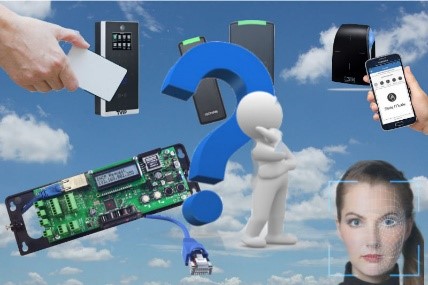
To carry out an accessibility control plan, a number of various parts have to be in place:
• Accessibility control tools or approaches for presenting credentials
• Accessibility control readers
• Gain access to control devices
• Software program.
These components create the basis of an digital accessibility control system, which replaces traditional systems based on locks as well as tricks. In the contemporary system, the 'lock' is the accessibility control visitor and also access control system, and the ' vital' is the individual's tool for presenting qualifications.
There is likewise a growing fad in the direction of the fostering of touchless access control modern technologies, which was driven by the obstacles of the pandemic. To enhance the analysis of data from accessibility control systems, protection teams are likewise currently using artificial intelligence techniques.